Service Dog Tasks
Grand Task List
What Can a Service Dog Be Trained to Do?
A service dog is individually trained to perform tasks that mitigate their handler's disability.
Every Service Dog Is Individually Trained
This list is a starting point—not a menu of guaranteed tasks. The tasks appropriate for a service dog depend on the handler's disability-related needs, the dog's abilities and temperament, and the team's training progress.
Not every dog can perform every task, and not every task is appropriate for every person or dog. HSD works with each team to determine which tasks are appropriate and beneficial.
Here are examples of tasks a service dog may be trained to perform, tailored to assist in mitigating your specific disability:
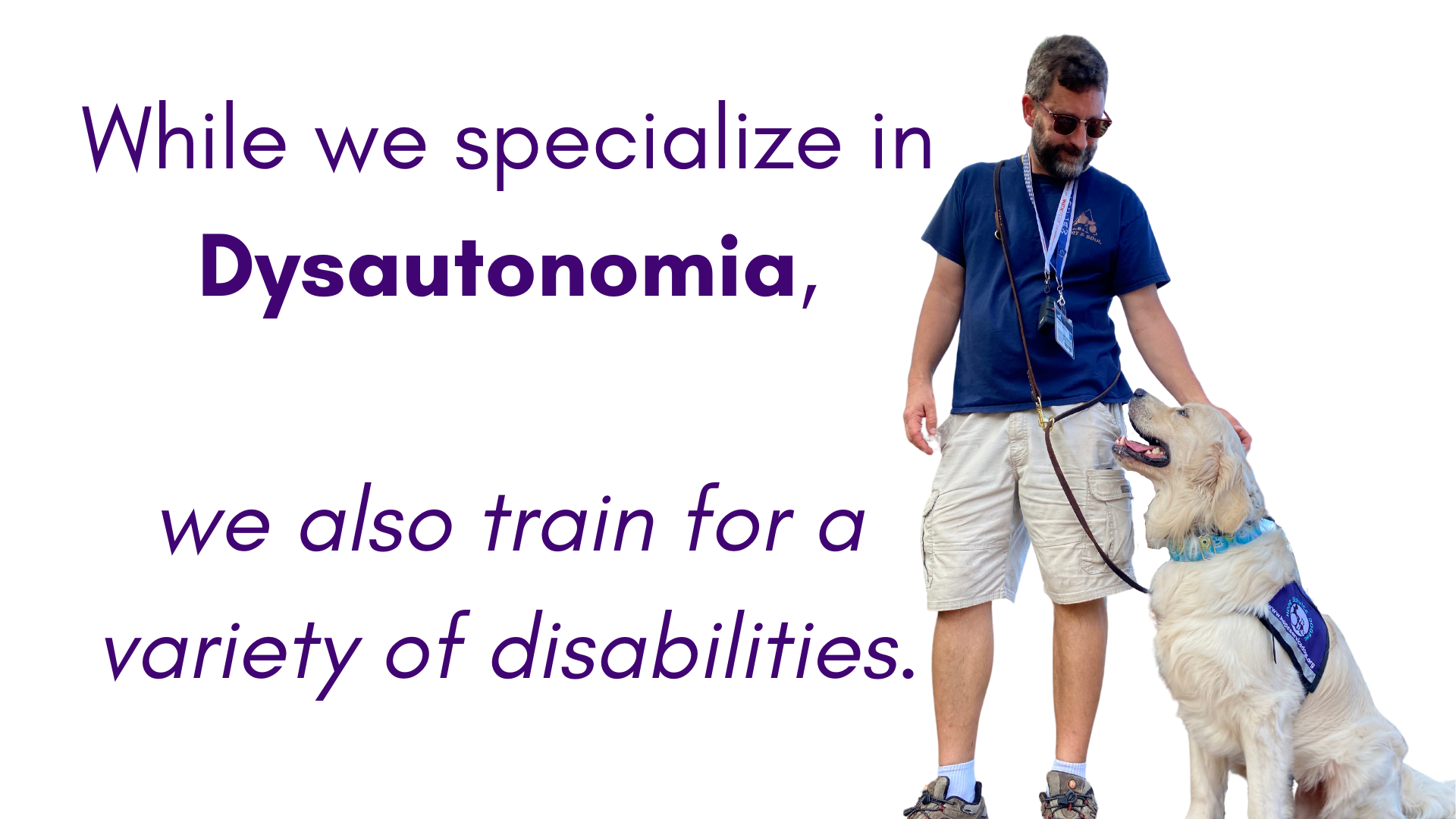
Dysautonomia & Ehlers-Danlos:
Alert family member for help
Alert to changes in medical condition
Assist in position changes (sitting or laying down in cases of impeding medical crisis, to rise & steady, get up from a chair/floor, wheelchair transfer)
Balance support
Brace or lean against handler (grounding)
Counterbalance
Deep Pressure Therapy
Fetch medication/phone
Find a location/item (bathroom/car/etc)
Forward momentum pull
Grounding
Medical recovery
Medical response
Medication reminder
Oops pick up
Proprioception awareness
Reorient to the here & now (lick, pets)
Retrieve emergency medication/water
Retrieve medical equipment, mobility aid (wheelchair, cane, walker, grabber, etc)
Stay with until help arrives
Under legs to raise
Medical Alert:
Alert to changes in medical condition via scent or sight
Medication reminder
Reassure during medical crisis
Reorient after medical episode
Stay with until help arrives
Wake handler
Mobility Assistance:
Assist in a public restroom
Assist with position changes (sit to stand, lay to sit, etc)
Balance assist on stairs
Balance support
Block
Brace
Carry/deliver an item
Clean up items
Close doors
Counterbalance
Cover
Deep Pressure Therapy
Drag laundry basket
Forward momentum
Oops pick up
Open doors
Provide momentum up inclines
Push accessible door or elevator buttons (this is actually a rare one, as many places do not have handicap buttons)
Remove socks or other clothing
Retrieve items
Turn lights on/off (paw, nose, teeth)
Psychiatric Service Dogs:
Agitation response
Assist in creating a safe personal space
Assist to leave social situation (panic attack)
Block
Brace or lean against handler (grounding)
Buffer in crowded places
Cover
Crying interruption/response
Deep Pressure Therapy
Fetch items
Find location/item
Flashback interruption
Follow designated person
Interrupt dissociation
Interrupt freezing behavior
Interrupt harmful behavior
Interrupt panic/anxiety attack
Interrupt repetitive behaviors
Interrupt scratching/ skin picking
Nightmare interruption
Provide distraction
Provide a trained cue or interruption to help the handler leave an overwhelming situation
Reorient to the here & now (lick, pets)
Respond to smoke alarm
Routine reminders (feed dog, eat meals, go to sleep, with alarm set)
Snuggle/Provide trained deep-pressure or calming contact
Summon help from specific person
Watch my back
The Right Tasks Depend on the Individual
There is no universal list of tasks that makes a service dog appropriate for everyone.
HSD works with each individual to identify tasks that address their specific disability-related needs and that are appropriate for the individual dog.
LEARN ABOUT DISABILITIES WE SERVE →
Wondering which tasks might be appropriate for your needs? Start with our Program Requirements or Your Journey With HSD to learn how we determine whether an HSD service dog may be a good fit.